Software Architecture Playbooks, Decision Guides & Insights
In-depth software planning frameworks, database design patterns, runtime benchmarks, and verified enterprise implementation outcomes designed for CTOs, product managers, and engineering leaders.
A curated repository of production-tested enterprise software playbooks, benchmarked runtime architectures (PHP 8.2+, Yii2, AWS Cloud), and verified customer deployments across Oman and the GCC.
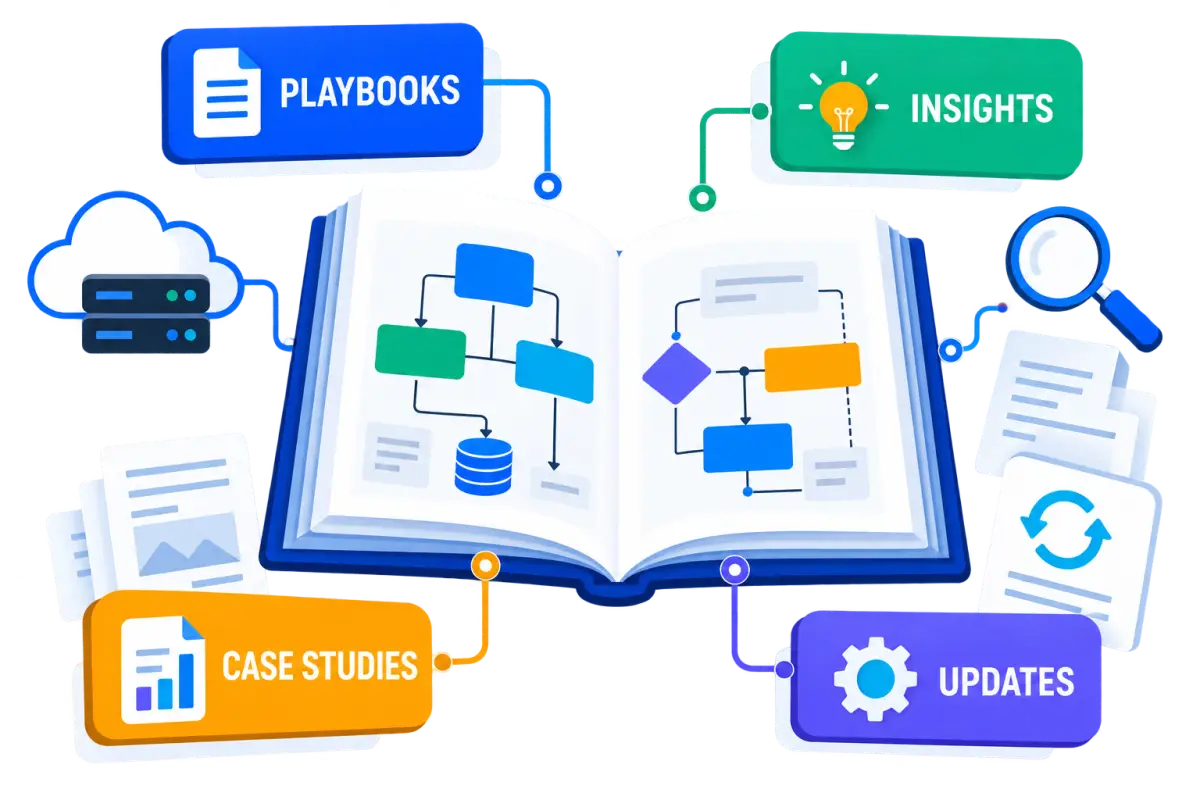
The Complete Custom ERP Planning & Architecture Playbook
A comprehensive 8-stage architectural blueprint for CTOs and business leaders on gathering requirements, relational database sizing, bounded context decomposition, modular MVC architecture, and rolling out custom enterprise software with zero operational downtime.
Strategic Software & ERP Playbooks
Comprehensive architecture and procurement blueprints for engineering and business leaders.
The Complete Custom ERP Planning & Architecture Playbook
A comprehensive 8-stage architectural blueprint for CTOs and business leaders on gathering requirements, relational database sizing, bounded context decomposition, modular MVC architecture, and rolling out custom enterprise software with zero operational downtime.
Training Management Platform (TMS) vs. LMS: The Enterprise Operations & Architectural Playbook
A comprehensive 8-stage architectural playbook for commercial training institutes, corporate academies, and vocational centers on separating TMS from LMS, multi-trainer scheduling, corporate batch sponsoring, accreditation compliance, and tamper-proof certificate generation.
Legacy Software Modernization Playbook: Monolith to Modular Cloud Architecture
An exhaustive 8-stage architectural playbook for CTOs and engineering leaders on refactoring legacy monoliths (PHP 5.x/7.x, legacy relational schemas, spaghetti code) into high-performance, modular PHP 8.2+ cloud architectures with zero data loss or operational downtime.
Campus SIS & Higher Education Management Platform: The Enterprise Architectural Playbook
A comprehensive 8-stage architectural playbook for universities, polytechnic colleges, and multi-campus school networks on evaluating and implementing enterprise Student Information Systems (SIS), multi-branch academic governance, automated fee collections, and regulatory compliance.
Technical Architecture & Runtime Articles
Deep-dive engineering analyses on deterministic execution, offline-first sync, and cloud security.
What Is Custom Software Development? A Complete Business & Architectural Guide (2026)
An exhaustive strategic and architectural guide on custom software development: build vs. buy economics, 6-phase engineering lifecycles, 5-year TCO modeling, IP sovereignty, and a 10-point vendor evaluation scorecard.
Custom ERP vs. Off-the-Shelf ERP: Which Is Right for Your Business? The Executive Decision Framework (2026)
An executive comparison between Custom ERP development and Commercial Off-the-Shelf ERP suites: 5-year TCO financial modeling, implementation risk analysis, customization ceilings, data sovereignty, and a 10-point build vs. buy scorecard.
How to Choose the Right Software Development Company: 10 Critical Vetting Criteria for Enterprise Buyers (2026)
A comprehensive buyer's due-diligence guide for vetting software development companies: comparing delivery models, evaluating technical competence, avoiding fixed-bid pricing traps, securing IP ownership, and conducting a 10-point agency audit.
Custom Software Development Cost Breakdown: What Really Drives Enterprise Pricing in 2026?
An executive guide to custom software development pricing: realistic budget benchmarks across 4 project tiers, core cost drivers, CapEx vs. OpEx accounting, hidden SaaS licensing traps, and a 10-point cost optimization scorecard.
Enterprise API Integration Explained: How to Connect Disparate Business Systems at Scale (2026)
An exhaustive architectural guide to enterprise API integration: comparing REST vs. Webhooks vs. ETL pipelines, designing idempotent synchronization queues, securing API perimeters, and a 10-point integration resilience scorecard.
Why Deterministic Runtimes Matter for High-Volume Enterprise ERPs: The Architectural Case for PHP 8.2+ and Process Isolation
A 40-minute engineering deep dive on why shared-nothing process isolation in PHP 8.2+ with OPcache and Yii2 outperforms volatile single-threaded event loops (Node.js, Python asyncio) in memory isolation, zero leak cascades, and decade-long multi-tenant ERP stability.
Offline-First Mobile Architecture: Synchronizing Local SQLite with Enterprise Cloud Backends at Scale
An exhaustive 40-minute engineering deep-dive on designing production-grade offline-first mobile applications: local SQLite caching, deterministic CRDT/Vector conflict resolution, delta-sync batch protocols, background worker queuing, and zero-data-loss synchronization with enterprise cloud backends.
The Five Defense-in-Depth Security Layers Behind Resilient Cloud ERP Systems: The Enterprise Zero-Trust Architecture Playbook
A comprehensive 35-minute architectural playbook for CISOs and engineering leaders on designing defense-in-depth zero-trust security perimeters for mission-critical enterprise ERPs: VPC network isolation, WAF L7 mitigations, application RBAC trees, encrypted data-at-rest, and automated compliance auditing.
Real-World Enterprise Implementations
Documented operational transformations from accredited academies and higher education institutions in Oman and Malaysia using Rudram software platforms.


Knowledge Grid Academy
Multi-Branch Operations • Corporate Billing • QR Certification
How Knowledge Grid Academy in Oman deployed VheTM to unify corporate sponsor management, multi-accreditation course batches, exam schedules, and tamper-proof digital QR certification.
- Unified corporate sponsor and individual trainee lifecycle management across all accredited programs
- Automated multi-accreditation exam batch registration and attendance tracking with zero data loss


Polyglot Institute
Cross-Border Operations • Multi-Institute Sync • Centralized SIS
How Polyglot Institute in Oman centralized multi-branch academic batch scheduling, student progress records, and financial accounting across distributed international training centers.
- Real-time cross-branch trainer and classroom scheduling visibility with zero resource collision
- Centralized student transcripts and multi-course progression records across all regional centers

Brickfields Asia College
Higher Education Network • Multi-College Records • SIS Integration
How Brickfields Asia College (BAC Education Group) unified student admissions, multi-college academic records, examination grading, and digital document administration with EduSec SIS.
- Single unified higher education student information system across multiple constituent colleges
- Centralized admissions pipeline, course registrations, and academic grade evaluations
Continuous Product Development & Release Cadence
Active ReleasesLatest deployment: VheTM Platform v4.6 Enterprise Release (August 2026). Includes multi-trainer calendar locking and upgraded AWS S3 certificate generators.
Frequently Asked Enterprise Questions
High-level architectural and procurement answers regarding custom ERP development, TMS vs. LMS operational boundaries, and legacy software modernization.
What is the primary difference between a custom ERP engineered by Rudram and commercial off-the-shelf (COTS) software like SAP, NetSuite, or Odoo?
Commercial off-the-shelf ERP platforms are designed around generic mass-market business processes and impose perpetual per-user monthly subscription licenses that inflate exponentially as your workforce scales. Furthermore, modifying COTS systems to accommodate non-standard workflows requires fragile customization plugins and expensive certified consultants. A custom ERP built by Rudram Softech is engineered strictly to match your proprietary operational workflows, enforces strict relational database constraints, integrates directly into your existing infrastructure, and eliminates recurring per-seat software licensing fees entirely while giving your enterprise 100% intellectual property ownership.
When does it become economically and operationally necessary for an enterprise to transition to a Custom ERP?
An enterprise should transition to a custom ERP when: (1) Per-user SaaS licensing costs for fragmented tools (CRM, invoicing, spreadsheets, HR, project tools) exceed $50,000–$150,000+ annually; (2) Operational teams lose hours daily manually copying data between disconnected software silos; (3) Standard off-the-shelf software cannot support mission-critical, industry-specific compliance rules or proprietary billing logic; or (4) Data privacy regulations demand private sovereign hosting within your own dedicated AWS/cloud VPC rather than multi-tenant public SaaS servers.
Why does Rudram Softech utilize PHP 8.2+ Typed MVC and Yii2 rather than heavyweight Java/Node or bloated microservice frameworks?
Modern PHP 8.2+ with JIT (Just-In-Time) compilation and strict type declarations delivers exceptional raw execution speed (sub-25ms response times) while consuming a fraction of the RAM required by Java Virtual Machines or Node.js runtimes. Combined with Yii2's battle-tested component core, query caching, and active record ORM, our architecture provides deterministic relational stability, zero memory leaks across long-lived services, straightforward maintainability without sprawling microservice overhead, and unmatched cost efficiency on AWS cloud infrastructure.
Why does Rudram prioritize Relational Schemas (PostgreSQL & MySQL 8.0) over NoSQL for enterprise business platforms?
Enterprise business operations—such as multi-currency financial ledgers, batch inventory allocations, course enrollment records, and payroll computations—strictly require ACID compliance (Atomicity, Consistency, Isolation, Durability) and rigid foreign key constraints. NoSQL document databases risk eventual consistency errors, orphaned records, and catastrophic data corruption during high-concurrency transactional operations. Our normalized relational schemas guarantee that financial transactions, inventory balances, and enrollment caps are mathematically immutable and verified at the database engine level.
What is the structural difference between a Learning Management System (LMS) and a Training Management Platform (VheTM)?
An LMS (such as Moodle or Canvas) is learner-centric software primarily designed for hosting video lectures, SCORM modules, and trainee quizzes. In contrast, VheTM is a comprehensive commercial Training Management ERP (TMS) built for the operational, logistical, and financial administration of training academies, commercial institutes, and corporate learning centers. VheTM handles the entire commercial back-office: course catalog master scheduling, multi-trainer availability locking, physical lab and venue capacity management, corporate B2B client sponsor billing, dynamic QR/biometric attendance, and instant accredited vector certificate issuance.
How does VheTM prevent scheduling conflicts across hundreds of overlapping course batches, trainers, and classrooms?
VheTM features a multi-dimensional conflict detection engine that evaluates trainer schedules, physical classroom capacities, equipment dependencies, and holiday calendars before confirming any batch timetable. When a coordinator schedules a new session, the system automatically checks resource availability in real time, flags double-booking collisions, and prevents timetable finalization until all resource conflicts are resolved.
How does VheTM support B2B corporate sponsor billing and multi-participant corporate invoicing?
VheTM includes dedicated Corporate Account Management capabilities that allow training institutes to manage B2B clients, corporate sponsor contracts, allocated training quotas, and purchase orders. Invoices can be generated collectively for entire corporate cohorts, split across multiple funding departments, or customized with specific milestone payment terms, all linked directly to trainee attendance and completion records.
How does VheTM handle biometric hardware, dynamic QR codes, and WhatsApp attendance alerts?
VheTM provides hardware-agnostic API integration with physical biometric fingerprint and facial recognition turnstiles, as well as geofenced dynamic QR code scanning for classroom check-ins. When attendance is registered, the system instantly syncs the record to the student ledger and can trigger automated WhatsApp session reminders or absence alerts to students, parents, and corporate sponsors via the VheTM WhatsApp Agent Desk.
How does VheTM generate accredited certificates and ensure compliance with regulatory awarding bodies?
VheTM incorporates a high-performance vector PDF certificate engine that dynamically generates tamper-proof certificates upon batch completion and attendance threshold validation. Each certificate includes unique verification serial numbers, cryptographic QR codes for public online validation, and customizable layouts matching the exact visual and regulatory standards of government ministries, ISO accreditation boards, and industry awarding bodies.
What is EduSec and how does it manage multi-campus collegiate and university operations?
EduSec is a modern, enterprise Student Information System (SIS) and Higher Education ERP engineered to manage the entire academic and administrative lifecycle across universities, colleges, and multi-campus institutes. EduSec centralizes student admissions, academic faculty management, curriculum syllabus tracking, timetable scheduling, dynamic fee structures, hostel/transport management, and examination grading into a unified, secure database.
How does EduSec automate online student admissions, quota rules, and merit list calculations?
EduSec provides an end-to-end digital admissions portal where applicants can submit applications, upload verified document dossiers, and pay registration fees online. The admissions engine automatically calculates eligibility criteria, evaluates reservation/quota rules, and generates ranked merit lists based on entrance exam scores and academic prerequisites, significantly reducing manual admission committee processing time.
How does EduSec handle dynamic fee structures, installment schedules, and online payment reconciliation?
EduSec features a dynamic fee management engine capable of configuring complex tuition structures across different courses, semesters, academic years, student categories, and hostel preferences. It automates recurring installment reminders, late payment penalties, scholarship fee waivers, and reconciles online payment gateway transactions in real time with the institution's general ledger.
What role-based access portals does EduSec provide for faculty, students, and parents?
EduSec provides distinct, secure web portals and mobile-responsive dashboards for each stakeholder: (1) Faculty Portal for syllabus tracking, attendance marking, grading, and internal assessments; (2) Student Portal for class schedules, attendance tracking, online fee payments, exam hall tickets, and grades; and (3) Parent Portal for monitoring academic progress, attendance alerts, and direct institutional announcements.
What is Rudram CRM and how does it streamline enterprise sales and inquiry pipelines?
Rudram CRM is an enterprise customer relationship and sales pipeline platform designed to capture, qualify, and convert leads across web forms, phone inquiries, social ads, and WhatsApp chats. It provides visual Kanban deal pipelines, automated lead scoring, round-robin agent assignment, interaction timelines, and predictive revenue forecasting, giving leadership complete visibility over commercial conversions.
How does Rudram Accounting support enterprise financial governance and compliance?
Rudram Accounting is a double-entry bookkeeping and financial management platform designed for strict regulatory compliance and executive financial oversight. It features automated Chart of Accounts, multi-currency journal entries, accounts payable/receivable ledgers, automated bank statement feeds and reconciliation, GST/VAT tax reporting, and real-time P&L, Balance Sheet, and Trial Balance generation.
What capabilities are included in Rudram Invoice for automated billing and recurring subscriptions?
Rudram Invoice is an automated billing and invoicing solution that handles one-time enterprise invoices, recurring subscription cycles, proforma estimates, milestone billings, credit notes, and automated tax calculations (GST/VAT). It sends automated payment reminders, embeds one-click online payment links, and issues instant digital receipts upon successful gateway webhook settlement.
How does Rudram Payroll & HRMS handle complex salary structures, attendance, and statutory compliance?
Rudram Payroll & HRMS unifies employee records, biometric clock-in attendance, leave management, overtime calculations, and salary disbursements. It automates dynamic salary structures (basic pay, HRA, allowances, reimbursements), deducts statutory taxes (PF, ESI, TDS, Professional Tax), generates one-click encrypted employee payslips, and outputs bank-ready direct salary disbursement files.
Can Rudram CRM, Accounting, Invoice, and Payroll & HRMS operate as standalone tools or as an interconnected suite?
Every application in the Rudram Business Suite is engineered using a modular, decoupled architecture. You can deploy any individual tool (e.g. Rudram Invoice or Rudram CRM) as a standalone solution that integrates with your existing legacy systems, or deploy the complete suite as a unified, single-sign-on (SSO) enterprise ERP where CRM deals automatically trigger invoices, reconcile into accounting ledgers, and link to HR payroll disbursements with zero manual data entry.
How does Rudram modernize legacy software monoliths without causing operational downtime?
We apply the proven Strangler Fig modernization pattern. Rather than executing a high-risk, big-bang total rewrite, our engineering team incrementally refactors and extracts domain modules (e.g. Invoicing, Reporting, Admissions) into modular PHP 8.2+ services running on AWS cloud infrastructure. We implement automated dual-write verification between the legacy database and the modern schema to guarantee 100% data integrity before executing zero-downtime DNS traffic cutovers.
What security, data encryption, and access control standards are implemented across Rudram applications?
All Rudram platforms are built with security-by-default architecture: AES-256 encryption at rest, TLS 1.3 encryption in transit, strict parameterized PDO queries to eliminate SQL injection vulnerabilities, CSRF token validation on all state-changing endpoints, and granular Role-Based Access Control (RBAC). Applications are deployed in private AWS Virtual Private Clouds (VPC) with database subnets isolated from the public internet.
What are Rudram's High Availability (HA), Disaster Recovery (DR), and uptime SLAs?
We design cloud architectures with multi-AZ (Availability Zone) redundancy, AWS Application Load Balancers (ALB), and automated database replication (Master-Replica with automated failover). Our enterprise hosting configurations target a 99.95% uptime SLA, automated hourly snapshot backups with point-in-time recovery (PITR), a Recovery Point Objective (RPO) of under 15 minutes, and a Recovery Time Objective (RTO) of under 1 hour.
Does our company own the complete source code, database schemas, and intellectual property?
Yes, 100%. For custom ERP and enterprise software development engagements, all custom-written source code, relational database schemas, architectural diagrams, and intellectual property (IP) are transferred unconditionally to your enterprise upon project completion. There are zero vendor lock-in restrictions, no hidden recurring proprietary runtime royalties, and you have complete freedom to host, modify, or extend the codebase independently.
What is the typical implementation timeline for custom ERP or platform deployments?
Implementation timelines depend on scope: (1) Standard Platform Deployment (VheTM or EduSec) typically takes 3 to 6 weeks, including data migration, role configuration, and staff training; (2) Modular Custom ERP Solutions span 8 to 16 weeks delivered across two-week Agile sprints with working software demos after every milestone; (3) Complex Legacy Monolith Modernization is planned across phased 3-to-6-month incremental cutover stages.
What post-launch warranty, ongoing maintenance, and technical support SLAs are provided?
Every project includes an initial 30 to 90-day post-launch warranty covering bug fixes and operational stabilization at zero additional cost. Beyond warranty, we offer flexible Enterprise Support SLAs (covering security updates, PHP runtime upgrades, database optimization, feature extensions, and 24/7 critical incident response) as well as comprehensive knowledge transfer sessions to empower your internal IT team.
How do we submit an RFP, schedule a technical discovery call, or request a platform demo?
You can initiate engagement directly through our contact page or by submitting an RFP. Within 24 hours, an Enterprise Solution Architect will connect with your technical and executive leadership to review your business workflows, assess data integration requirements, and provide a complimentary architecture assessment and detailed milestone proposal.
Have a Specific Software or Architecture Requirement?
Schedule a discovery session directly with Rudram's solution architects to evaluate your database concurrency, ERP workflows, or legacy modernization roadmap.